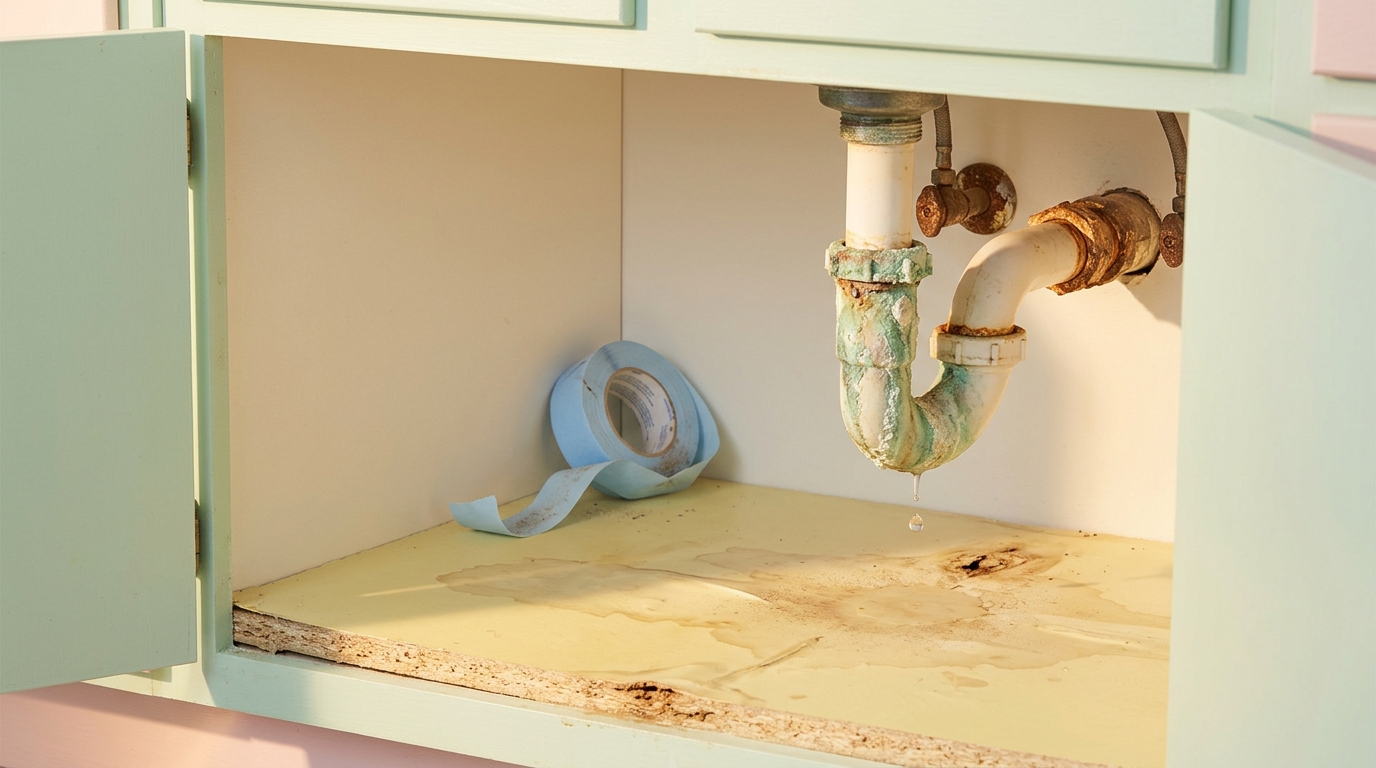
Ignoring a plumbing problem doesn't make it cheaper - it makes it catastrophic. The five issues below start small and escalate into structural damage, mold infestations, and five-figure repair bills if left unaddressed. Catch them early, and you're looking at a manageable fix. Miss them, and you're gutting walls.
1. Slow or Recurring Drain Clogs
A drain that clears slowly once is an inconvenience. A drain that clogs repeatedly is a warning sign of a deeper blockage - or worse, a compromised sewer line. Tree root intrusion, grease accumulation, and collapsed pipe sections all present first as slow drains before they escalate into complete sewage backups.
A full sewer line backup can push raw sewage into your home through floor drains and toilets. Remediation after a sewage backup typically costs between $3,000 and $10,000, depending on how much flooring and drywall gets contaminated. A professional drain cleaning and camera inspection costs a fraction of that.
What to do: If a drain clogs more than twice in a three-month period, schedule a professional hydrojetting service and a video pipe inspection. Don't rely on chemical drain cleaners - they degrade PVC pipe walls with repeated use and only dissolve surface-level clogs, leaving the underlying problem intact.
2. A Running Toilet
A toilet that runs continuously wastes between 200 and 700 gallons of water per day, depending on the severity of the flapper or fill valve failure. That translates directly into a bloated water bill and unnecessary strain on your municipal supply or well pump.
The noise is easy to tune out, which is exactly why this problem persists in so many homes for months at a time. But beyond the water waste, a constantly running toilet can indicate a cracked overflow tube or a failing float mechanism - components that, if ignored, can eventually cause the tank to overflow onto the floor.
What to do: Drop food coloring into the tank and wait 15 minutes without flushing. If color appears in the bowl, your flapper is leaking. A flapper replacement is a sub-$10 DIY fix. If replacing the flapper doesn't stop the running, call a licensed plumber to inspect the fill valve and overflow assembly.
3. Low Water Pressure Throughout the House
Isolated low pressure at a single fixture usually means a clogged aerator or showerhead - a five-minute fix. Low pressure throughout the entire house is a different problem entirely, and it demands immediate attention.
Whole-house pressure loss points to one of three serious causes:
- A leak in the main supply line- water is escaping somewhere between the municipal meter and your home
- Corroded galvanized steel pipes- mineral deposits narrow the pipe interior over decades, reducing flow significantly
- A failing pressure regulator- most homes have a pressure reducing valve (PRV) set between 40–80 PSI; a failed PRV causes pressure to drop or spike unpredictably
A main line leak left undetected can erode your foundation and saturate the soil beneath your slab, leading to settlement cracks and structural instability. Foundation repairs in this scenario routinely exceed $15,000.
What to do: Check your water meter with all fixtures off. If the dial still moves, you have an active leak. Call a plumber immediately for a pressure test and leak detection service. Do not wait to see if the pressure "comes back on its own."
4. Water Stains on Ceilings or Walls
A brown or yellow water stain on a ceiling or wall is never cosmetic. It is physical evidence that water has already traveled through your structure - through insulation, wood framing, and drywall - and pooled long enough to leave a mineral deposit ring. By the time a stain appears on your surface, the damage behind it is already done.
The two most dangerous consequences of hidden water intrusion are:
- Mold growth- Black mold (Stachybotrys chartarum) can colonize wet drywall within 24–48 hours and poses serious respiratory health risks. Mold remediation for a single room averages $1,500 to $4,000.
- Structural wood rot- Wet framing members lose load-bearing strength. Rot can spread from a single leak point to surrounding joists and studs within weeks in a humid environment.
Common sources include leaking supply lines inside walls, a failing wax seal beneath a toilet, a deteriorated shower pan, or a pinhole leak in copper pipe caused by aggressive water chemistry.
What to do: Do not paint over the stain. Turn off the water supply to the area you suspect and call a plumber for a leak detection visit. If the stain is under a bathroom, have the toilet wax ring and supply line inspected first - these are the most common culprits.
5. Discolored or Foul-Smelling Water
Water that runs brown, yellow, or smells like sulfur or rotten eggs is not a nuisance - it's a health and infrastructure alert. The cause determines the urgency, but none of these symptoms are safe to ignore.
Symptom
Likely Cause
Risk Level
Brown/rusty water
Corroding galvanized pipes or water heater tank failure
High - pipe failure imminent
Yellow/cloudy water
Sediment in water heater or disturbed main line
Moderate - flush tank, monitor
Sulfur/rotten egg smell
Hydrogen sulfide from bacteria in water heater anode rod
Moderate-High - replace anode rod
Metallic taste
Copper or lead pipe corrosion
Critical - stop drinking; test water
Sudden blue-green staining
Acidic water corroding copper fixtures
High - pH imbalance damaging pipes
Metallic-tasting water with blue-green staining around fixtures demands immediate water testing. Lead and copper contamination are serious public health concerns, and no acceptable exposure level to lead in drinking water exists according to the EPA.
What to do: Stop drinking the water until testing confirms safety. Contact a licensed plumber to assess your pipe material and water chemistry. A whole-house water filtration system or pipe repiping may be necessary depending on test results.
The Real Cost of Waiting
Every one of these five problems follows the same trajectory: a small, fixable issue becomes a large, expensive disaster when ignored. A $150 service call today prevents a $12,000 pipe replacement or mold remediation project next year. Plumbing systems don't heal themselves - they deteriorate. The moment you notice a symptom, treat it as the system asking for help.
Schedule annual plumbing inspections, know where your main shut-off valve is located, and never let a visible symptom sit for more than a week without professional evaluation.
Plumbing Problems You Should Never Ignore FAQ
How do I know if a plumbing problem is an emergency?
Any active leak you cannot stop by turning off a fixture's shut-off valve, sewage backup into the home, complete loss of water pressure, or water near an electrical panel is a plumbing emergency. Call a licensed emergency plumber immediately and shut off the main water supply to the house.
Can I fix slow drains myself without calling a plumber?
A single slow drain caused by hair or soap buildup can often be cleared with a drain snake or a baking soda and vinegar flush. Recurring slow drains in multiple fixtures, or any backup accompanied by gurgling sounds from other drains, require professional hydrojetting and a video camera inspection - DIY methods won't reach the root cause.
How often should I have my plumbing professionally inspected?
Most plumbers and home warranty providers recommend a full plumbing inspection once per year for homes older than 10 years, and every two years for newer construction. Homes with galvanized steel pipes or in areas with hard water should be inspected annually without exception, as corrosion and mineral buildup accelerate pipe degradation in those conditions.
What is the average cost to repipe a house in 2026?
A full repipe of an average single-family home (2,000–3,000 sq ft) using PEX tubing currently runs between $8,000 and $20,000, depending on the home's layout, local labor rates, and accessibility of existing pipes. Homes with copper pipe and no corrosion issues can often avoid full repiping through targeted spot repairs at a significantly lower cost.
Is low water pressure dangerous, or just annoying?
Whole-house low water pressure is dangerous, not just inconvenient. It frequently indicates an active main line leak or severely corroded pipes - both of which can damage your foundation, waste thousands of gallons, and lead to complete pipe failure if unaddressed. Pressure that drops suddenly and doesn't recover warrants same-day professional evaluation.